
Energy Storage & Industrial Safety Early-Warning Architecture
Using TIPS early gas-sensing technology, we help ESS cabinets, UPS systems, and industrial lithium-battery environments detect venting signals before thermal runaway and build a verifiable, integrable safety-monitoring workflow.
High-density energy storage and industrial lithium-battery sites need earlier risk recognition.
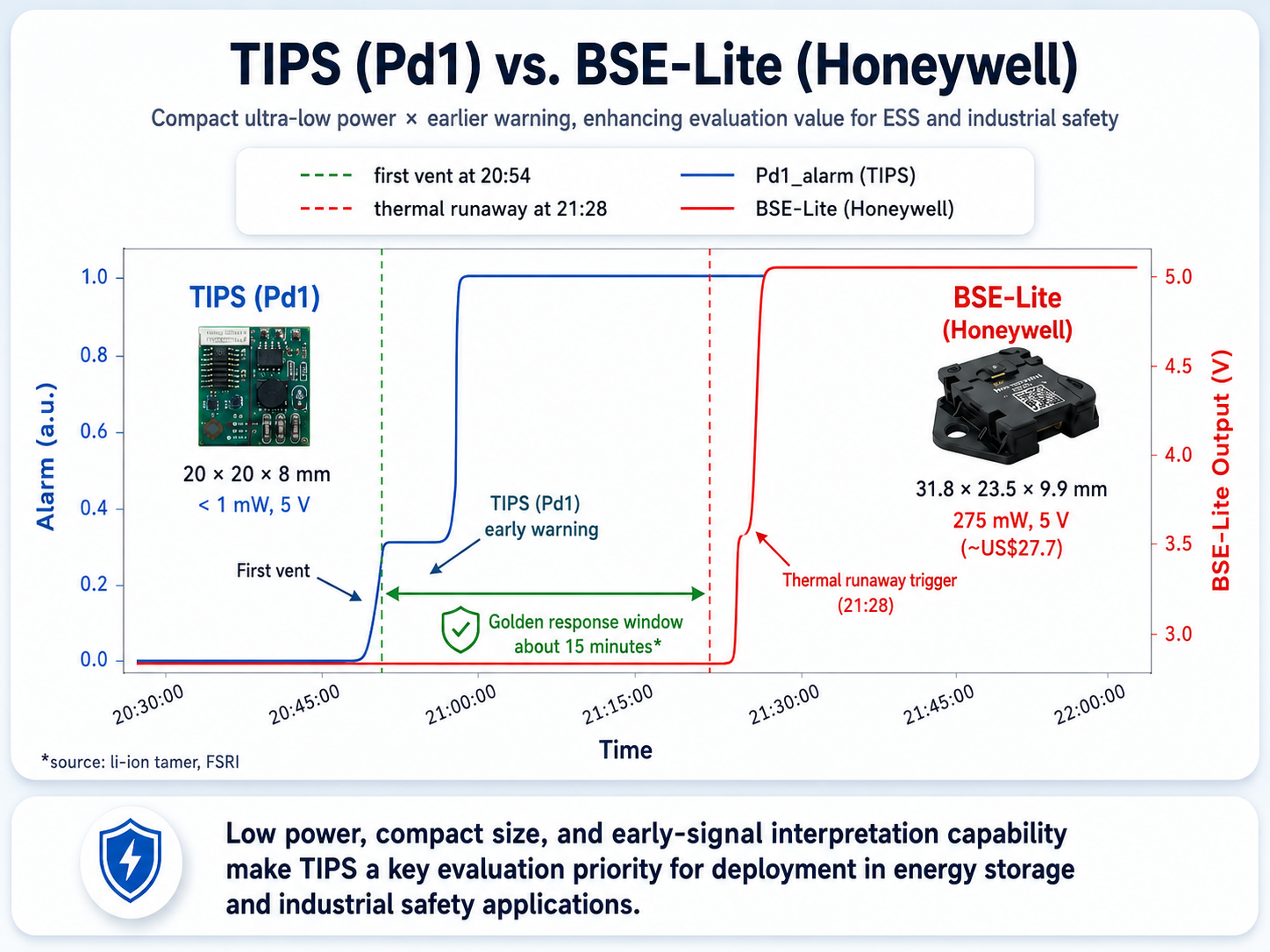
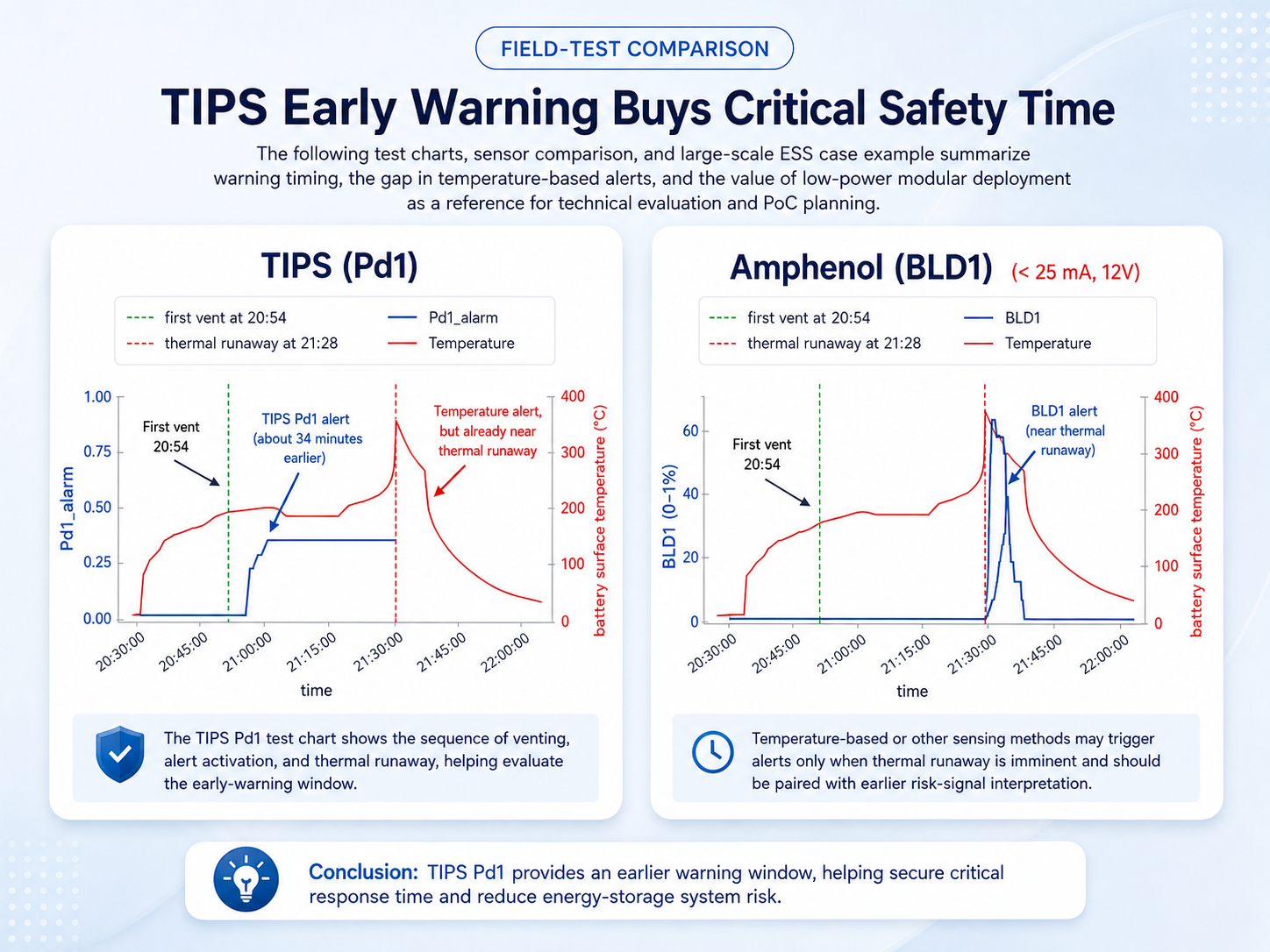
In high-density lithium-battery systems, relying only on temperature alarms may not provide enough lead time before thermal runaway. Early gas signals, venting behavior, and site conditions can help operators initiate derating, isolation, ventilation, and fire-response procedures earlier.
Early Risk-Signal Recognition
Interpret gas signals, venting behavior, and site conditions as early indicators before thermal-runaway escalation.
Integration with Existing Monitoring Systems
Plan signal integration with BMS, EMS, PLC, fire-protection systems, or centralized monitoring platforms.
PoC Validation and Deployment
Move from small-scale testing and signal validation to alarm thresholds, deployment planning, and operating procedures.
Technical Comparison and Incident Case Study
Field-test charts and a large-scale ESS incident case provide a practical reference for PoC planning, system integration, and risk-evaluation decisions.
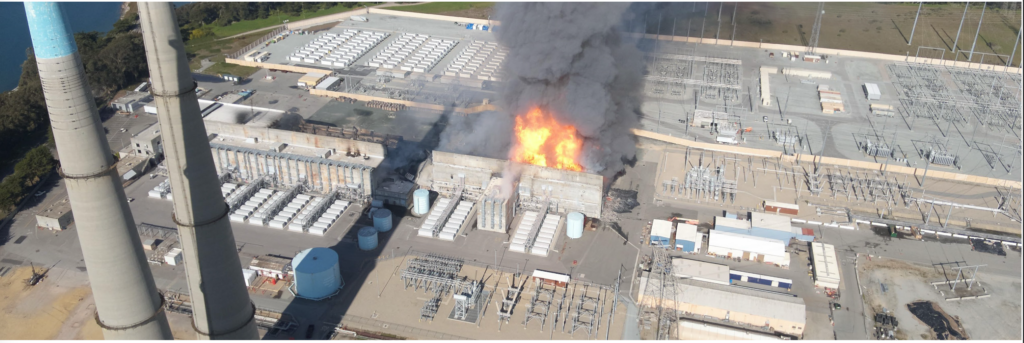
Moss Landing Fire, California
January 2025
The incident led to evacuation and operational disruption, underscoring the need for earlier venting and abnormal-signal recognition in high-risk battery sites.
ImpactApprox. 1,200–1,500 residents evacuated; schools closed; nearby highways affected.
LossEstimated losses exceeded USD 400M, including equipment damage and operational interruption.
Early warning and venting recognition help shorten response time and reduce escalation risk.
Build a consistent safety-monitoring architecture from ESS cabinets to industrial power environments.
ESS Cabinets and BESS Sites
- Battery cabinets, enclosures, and module-level monitoring
- Integration with BMS, EMS, and fire-protection systems
- Event alarms and emergency-response workflows
Industrial Power and UPS
- Data centers, plant power rooms, and backup battery systems
- Additional risk visibility beyond temperature-only alerts
- Monitoring-point planning and maintenance workflows
Lithium-Battery Logistics and Test Sites
- Storage, charge/discharge testing, repair, and recycling flows
- Alarm thresholds based on different risk levels
- Support for PoC, pilot deployment, and pre-production evaluation
From risk assessment to system integration, build an executable deployment process.
Site Risk Assessment
Review battery type, monitoring points, existing systems, and safety strategy.
Module and Signal Planning
Plan TIPS placement, power supply, signal output, and alarm thresholds.
PoC Validation
Validate signal stability and alarm thresholds using a test platform or pilot site.
Deployment and Operation
Establish installation, calibration, inspection, and alarm-response procedures.
Planning energy-storage safety monitoring or industrial battery early-warning deployment?
Share your site type, battery specifications, monitoring points, existing system interfaces, and deployment timeline. We can help evaluate TIPS modules, PoC testing, and system-integration paths.